

Story by
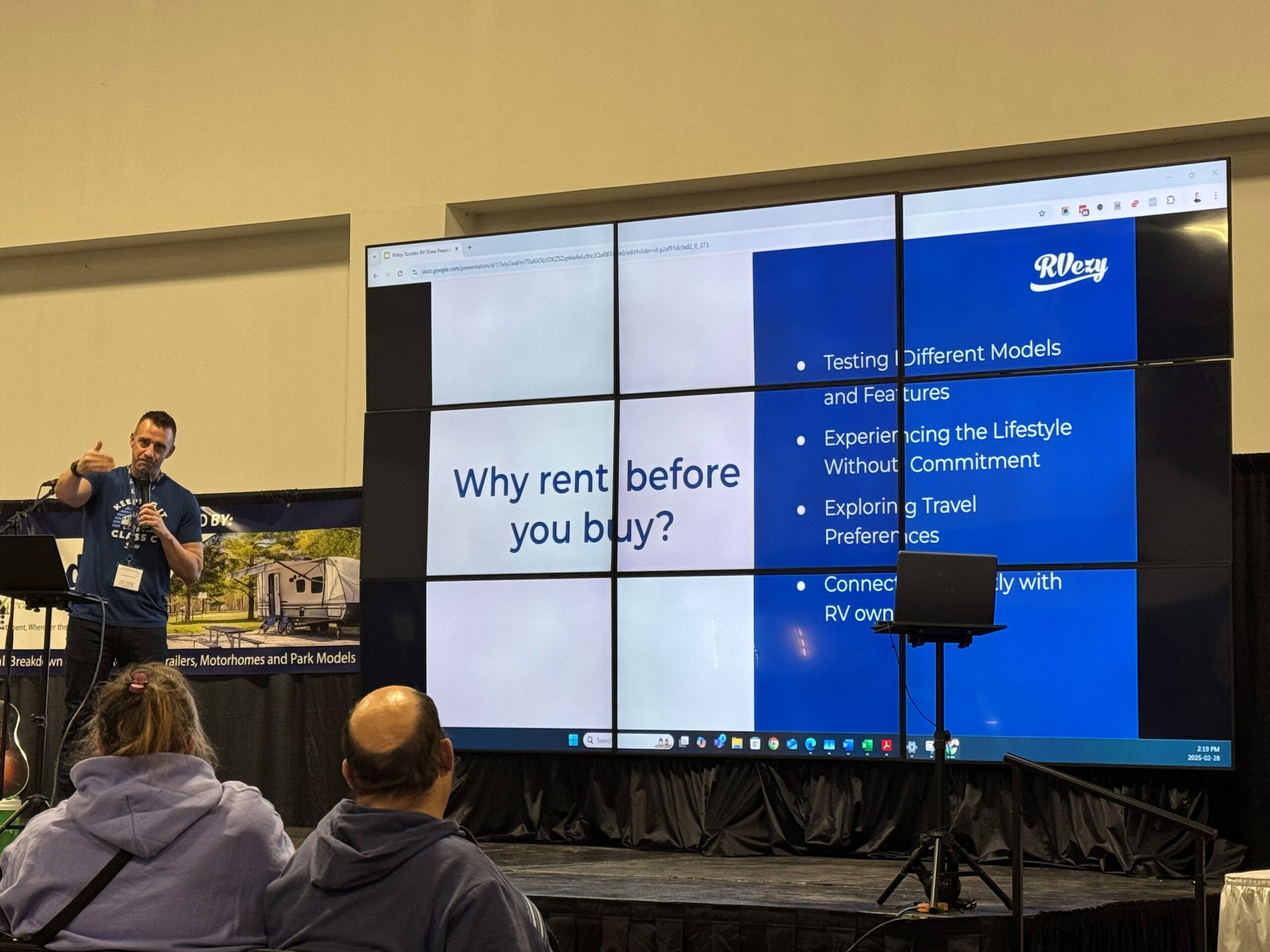
Michael McNaught still recalls the rust-coloured shoreline of Prince Edward Island unfurling before him on his first recreational vehicle trip more than three decades ago. But connecting with fellow travellers and family along the way left an even bigger impression. “My grandpa had a CB radio in the truck, so I got to talk to all the truckers along the drive,” said McNaught, recalling his tour of the Maritimes as a child in the early 1990s. Since then, the Ottawa resident has managed to spread those sorts of experiences to hundreds of thousands of others through his 10-year-old startup, RVezy.
Often described as an Airbnb for RVs, the company connects recreational vehicle owners with renters via its online platform. Peer-to-peer marketplaces are just one way Canadians can hit the open road — or hunker down at a campground — in motorhomes and towable trailers, as the turn away from U.S. travel continues to stoke interest in regional getaways. Enthusiasts say those looking to rent an RV should give careful consideration to their travel needs and budget, and plan their trip with an eye to campground locations and electrical hookups.
“We’re seeing a lot of interest in RVing across Canada, especially from rental agencies,” said Shane Devenish, president of the Canadian Recreational Vehicle Association. Rates at big rental outfits such as CanaDream, Cruise Canada and Fraserway sit between $100 and $400 per night, depending on the size and season. They notch closer to the upper half of that range this time of year.
RVezy rentals often go for between $100 and $150 a night for a trailer and $200 to $300 per night for a motorhome — often with unlimited mileage — according to Devenish and McNaught. But they also come with the slight risk of last-minute cancellation by the owner.
As for RV size, they typically range from 20 to 33 feet in length. One rule of thumb is to choose based on the number of travellers to ensure enough sleeping spots. A motorhome with a sleeping space above the cab and bunk beds along the side can be ideal for families with younger kids, said Devenish. “They can put pictures on the wall, stuffed animals, to make that feel like their space,” he said, citing the advantages over a pullout couch or dinette bench. Also, note that the bigger the vehicle, the more gas guzzled. A typical tank on a 25-footer holds about 200 litres of gas, costing $320 to fill at $1.60 per litre. Planning in advance — up to a point — is essential to a successful road trip.
Read Full Article by Christopher Reynolds of The Canadian Press was first published June 18, 2026.

- General Coach Canada Acquires Assets of Prolite Brand - October 2, 2026
- NHTSA releases its most recent installment of RV recalls effective September 21st, 2026 - September 21, 2026
- NHTSA releases its most recent installment of RV recalls effective September 8th, 2026 - September 8, 2026